Whether you’re building a home, villa, commercial office, warehouse, or industrial facility, one of the first decisions you’ll face is how your construction project will be managed. Many property owners today prefer turnkey construction because it offers the convenience of working with a single company that manages the entire project—from planning and design to construction and final handover. However, like any construction method, it has both advantages and limitations.
In this guide, we’ll explain what turnkey construction means, its key benefits and disadvantages, and when it may be the right choice for your project.
What are the advantages and disadvantages of turnkey construction?
Turnkey construction offers a single point of responsibility, streamlined project management, predictable timelines, and better coordination between design and execution. However, it may provide less flexibility for frequent design changes during construction and requires careful selection of an experienced, trustworthy construction company.
What Is Turnkey Construction?
A turnkey construction project is one where a single construction company takes responsibility for planning, design coordination, procurement, execution, quality control, and final delivery.
Instead of coordinating with multiple contractors, consultants, and suppliers, the client works primarily with one project team.
Once construction is complete, the property is ready for use—hence the term “turnkey,” meaning the owner can simply receive the keys and move forward with occupancy or operations.
How Does Turnkey Construction Work?
Although every project is unique, a typical turnkey process includes:
- Initial consultation
- Site evaluation
- Design and planning
- Budget estimation
- Material procurement
- Construction execution
- Quality inspections
- Final handover
This integrated approach helps improve communication and accountability throughout the project lifecycle.
Advantages of Turnkey Construction
1. Single Point of Responsibility
One of the biggest advantages is that the client deals with only one construction partner.
Instead of managing architects, contractors, suppliers, and consultants separately, communication is streamlined through a single team.
This reduces confusion and improves accountability.
2. Better Project Coordination
Since one company oversees multiple stages of the project, planning and execution are generally more coordinated.
Design decisions, procurement schedules, and construction activities can be aligned more efficiently.
3. Faster Project Completion
Integrated project management often reduces delays caused by coordination issues between different vendors.
While every project timeline depends on factors such as approvals, weather, and site conditions, a well-managed turnkey approach can improve overall efficiency.
4. Better Cost Visibility
Most turnkey projects begin with a detailed scope of work and budget estimate.
This helps clients understand:
- Project inclusions
- Material specifications
- Payment schedules
- Construction milestones
Clear documentation can reduce unexpected cost variations when compared with less structured approaches.
5. Simplified Communication
Having one dedicated project team makes it easier to:
- Track progress
- Discuss changes
- Resolve issues
- Receive regular updates
This often results in a smoother client experience.
6. Quality Control
Professional turnkey companies usually establish quality checks throughout construction.
This may include:
- Material inspections
- Structural supervision
- Site monitoring
- Workmanship reviews
- Final quality assessment
Consistent quality management contributes to better long-term performance.
7. Less Stress for Property Owners
Construction projects require continuous coordination.
A turnkey approach allows homeowners and business owners to spend less time managing day-to-day site activities while remaining informed through regular project updates.
Disadvantages of Turnkey Construction
1. Limited Flexibility During Construction
Once construction begins, major design changes may affect the schedule, budget, or both.
Clients should finalise important design decisions before execution starts whenever possible.
2. Success Depends on the Construction Company
A turnkey model works best when managed by an experienced and reliable company.
If project management or communication is weak, it can affect timelines, quality, and client satisfaction.
This makes careful contractor selection especially important.
3. Scope Must Be Clearly Defined
Misunderstandings about project scope can lead to disputes.
A detailed contract should specify:
- Materials
- Finishes
- Timeline
- Payment schedule
- Exclusions
- Warranty terms
Clear documentation helps both parties align expectations.
4. Less Direct Control Over Daily Decisions
Some property owners prefer to personally select vendors or supervise individual aspects of construction.
In a turnkey project, many operational decisions are coordinated by the construction company within the agreed scope.
Turnkey Construction vs Traditional Construction
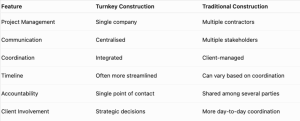
The right choice depends on the project’s complexity, your preferred level of involvement, and the expertise of the professionals you hire.
Is Turnkey Construction Right for You?
A turnkey approach may be suitable if you:
- Want one company to manage the project
- Prefer simplified communication
- Have limited time for daily supervision
- Value coordinated planning and execution
- Want a structured project management process
You may consider other delivery methods if you want extensive involvement in contractor selection or expect frequent design changes during construction.
Common Mistakes to Avoid
Before choosing any construction model:
- Selecting solely based on the lowest quotation
- Not reviewing previous projects
- Signing incomplete contracts
- Ignoring quality standards
- Failing to define project scope
- Not discussing timelines and communication processes
- Overlooking post-handover support
A thorough evaluation can help reduce project risks.
Why Choosing the Right Construction Partner Matters
Whether you choose a turnkey model or another construction approach, the experience and professionalism of the construction company play a significant role in project success.
Look for a partner with:
- Proven project experience
- Transparent communication
- Strong quality control practices
- Skilled engineering teams
- Real project portfolio
- Clear documentation
- Commitment to safety and client satisfaction
These qualities are often more important than the project delivery model itself.
Conclusion
Turnkey construction offers a practical and efficient solution for many residential and commercial projects by simplifying coordination, improving accountability, and streamlining communication. While it may not suit every project’s requirements, it can be an excellent option for clients seeking a structured and professionally managed construction process.
The key is not just choosing a turnkey model—but choosing the right construction partner.
At SVTN Group, we believe successful construction begins with thoughtful planning, transparent communication, and quality execution. Our team works closely with clients to understand their goals, manage projects efficiently, and deliver spaces designed for long-term value.
Frequently Asked Questions
What is a turnkey construction project?
A turnkey construction project is one in which a single company manages the project from planning and design coordination through construction and final handover, providing the client with a ready-to-use property.
Is turnkey construction more expensive?
Not necessarily. Costs vary depending on the project’s scope, specifications, materials, and complexity. A detailed proposal helps clients understand the overall investment and avoid unexpected expenses.
Who should choose turnkey construction?
Turnkey construction is often preferred by homeowners, businesses, and investors who want a streamlined process, a single point of contact, and coordinated project management.
Can I make changes during a turnkey project?
Yes, changes are possible. However, significant modifications after construction begins may affect the project timeline and budget. Finalising key decisions early usually leads to a smoother execution.
What should I look for in a turnkey construction company?
Evaluate the company’s experience, completed projects, client reviews, communication process, quality standards, project management practices, and contract transparency before making a decision.