A construction project rarely goes off track because of one big problem alone. Sometimes, a material delivery arrives late. A drawing changes after work has started. One contractor finishes later than expected, holding up another team. A small site issue remains unresolved until it affects the next stage.
Individually, these problems may seem manageable. Together, they can lead to delays, additional costs and unnecessary stress.
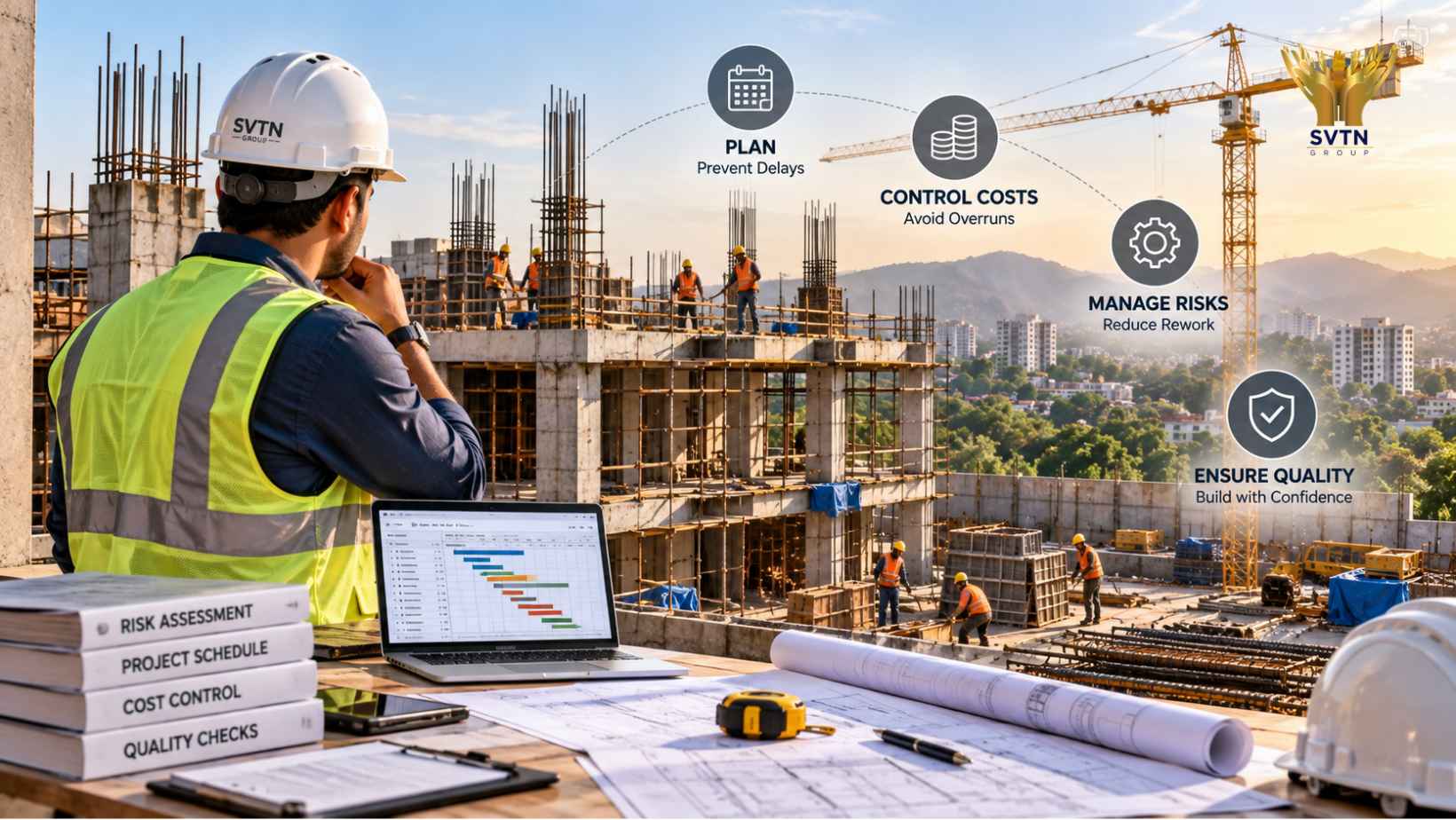
This is why successful construction management involves more than scheduling workers and checking daily progress. It also means identifying risks early, understanding their possible impact and deciding how they should be managed.
For homeowners, developers and businesses planning construction in Pune, this is where a Construction Management Firm in Pune can add value through structured coordination, monitoring and reporting.
Let’s look at how construction project risks can be identified and managed before they become expensive problems.
What Is Construction Project Risk Management?
Construction project risk management is the process of identifying events or conditions that could affect a project’s cost, schedule, quality or safety, and planning how to respond to them.
A risk is not necessarily a problem that has already happened.
For example, if a critical material has a long procurement lead time, the risk is that it may not arrive when required. Planning the order early can reduce the chance of a delay.
The same approach applies to design coordination, approvals, site access, labour availability, weather, quality and changes requested by the client.
The purpose of risk management is not to promise that nothing will go wrong. It is to reduce avoidable surprises and respond effectively when circumstances change.
1. Identify Risks Before Work Begins
Risk management should begin during project planning, not after construction has started.
The team needs to understand the project scope, drawings, site conditions, procurement requirements, approval dependencies and expected timeline.
For example, a project with complex structural work may have different risks from a straightforward residential building. A site with limited access may need more careful delivery planning.
A useful starting point is to ask what could prevent each major activity from starting or finishing as planned.
This creates an early list of issues that need attention.
2. Control Design Changes and Missing Information
One of the most common sources of construction disruption is incomplete or changing information.
A contractor may be ready to install plumbing, only to discover that the bathroom layout has changed. An electrical team may need to redo work because appliance locations were finalised late.
These situations can be reduced through coordinated drawings and timely decisions.
Before a major activity begins, the team should confirm that the relevant drawings, specifications and instructions are sufficiently clear.
When a change is necessary, its effect on cost, time and completed work should be assessed before implementation.
3. Build a Realistic Construction Schedule
A schedule should reflect the actual sequence of work, not just an ideal completion date.
Construction activities depend on one another. Finishing cannot proceed properly until the required preceding work is complete. Procurement must happen early enough for materials to arrive when needed.
A realistic schedule identifies key milestones, dependencies and activities that could affect the overall completion date.
It should also be reviewed as the project progresses.
If one activity slips, the team can assess whether another activity can proceed in parallel or whether the sequence needs to change.
This is more useful than waiting until the final deadline is at risk.
4. Manage Procurement Risks Early
Material procurement can affect both the budget and schedule.
Certain products may need advance ordering, while selections made late in the project can delay installation.
The team should identify materials that have longer lead times, confirm specifications and coordinate delivery with the construction schedule.
Storage conditions matter too. Materials need to be protected from damage, moisture or unsuitable site conditions.
A procurement plan should balance timely availability with sensible storage, avoiding both shortages and unnecessary stockpiling.
5. Monitor Budget Risks, Not Just the Original Estimate
A construction budget can be affected by changes, missing scope items, price movements, rework and unforeseen site conditions.
The first step is to establish what the approved budget actually covers.
Then, as the project progresses, costs should be tracked against the agreed scope and any approved changes.
Homeowners should be able to understand whether a new expense is part of the original contract, an additional requirement or a consequence of an unexpected condition.
This distinction helps prevent confusion and supports better financial decisions.
6. Prevent Rework Through Quality Checks
Rework happens when completed work needs to be corrected or repeated.
It may result from unclear instructions, incorrect installation, poor coordination or defects that were not identified in time.
A practical way to reduce rework is to inspect work at key stages, especially before it is covered by subsequent activities.
For example, relevant plumbing and electrical work should be checked before being concealed, while reinforcement and formwork require appropriate inspection before concreting.
The exact checks depend on the work and applicable specifications.
The principle is simple: identify problems at the earliest practical stage, when correcting them is easier.
7. Plan for Weather and Site Conditions
Pune’s monsoon can affect site access, excavation, material handling and weather-sensitive construction activities.
Risk planning should consider the stage of construction likely to coincide with heavy rainfall and the precautions required.
Depending on the project, these may include drainage arrangements, material protection, safe access and adjustments to the sequence of work.
Weather cannot be controlled, but its impact can often be managed more effectively when the team has considered it in advance.
8. Establish Clear Responsibilities
Construction involves several people and organisations. Without clearly assigned responsibilities, issues can remain unresolved because everyone assumes someone else is handling them.
A project should define who is responsible for decisions, procurement, approvals, inspections, site coordination and communication.
The arrangement will vary according to the contract and delivery model.
What matters is that important tasks have a clear owner and that outstanding issues are followed through to resolution.
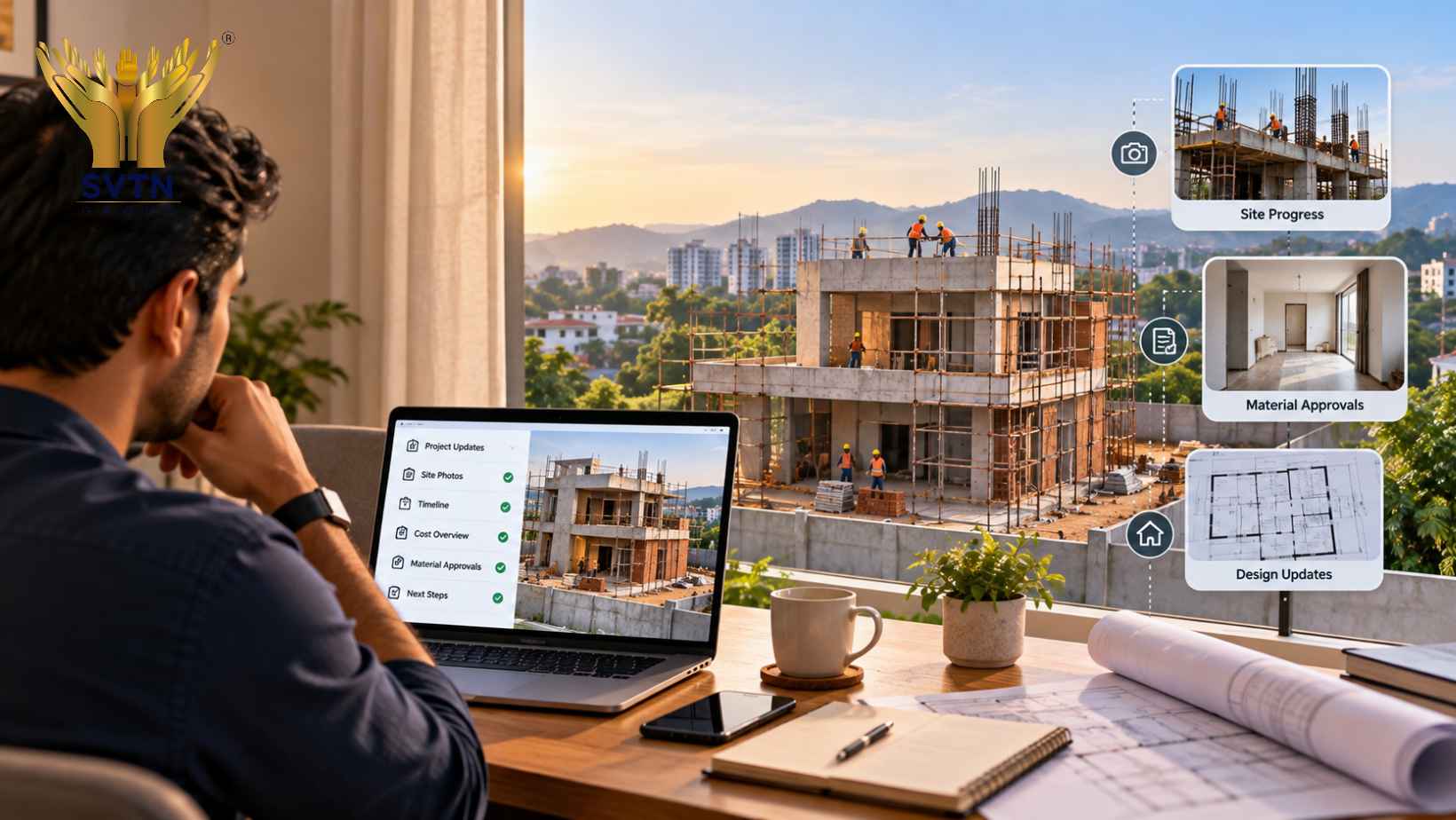
9. Use Progress Reporting to Identify Problems Early
A progress report should do more than state how much work has been completed.
It should also identify what is planned next, what is delayed, what decisions are pending and which risks require attention.
For example, if a material selection is holding up procurement, reporting it early gives the homeowner or project decision-maker time to respond.
Regular communication also helps keep expectations realistic.
A useful report should distinguish between completed work, work in progress, upcoming activities and issues requiring a decision.
10. Maintain a Clear Change-Control Process
Changes are sometimes unavoidable. The problem arises when they are introduced without understanding their consequences.
Before approving a change, consider:
- What exactly is changing?
- Does it affect completed work?
- Will it require new materials?
- Does it affect other trades?
- What is the additional cost?
- Will the completion date change?
Recording the decision helps everyone work from the same information.
This is particularly important when several contractors or consultants are involved.
11. Keep Safety and Compliance Within the Plan
Safety issues can affect workers, visitors, neighbouring properties and the wider project.
Site access, excavation, temporary electrical installations, scaffolding, material storage and work at height require appropriate controls.
Project planning should account for relevant safety measures and applicable statutory requirements.
These responsibilities should be assigned clearly rather than treated as informal tasks that can be handled later.
How a Construction Management Firm in Pune Helps
A Construction Management Firm in Pune can support a project by bringing its moving parts into a coordinated management process.
Depending on the agreed scope, this may include planning, scheduling, procurement coordination, cost monitoring, progress reporting, quality coordination, risk tracking and communication between project stakeholders.
The firm may act as the client’s representative or coordinate with contractors and consultants, depending on the contractual arrangement.
It is important to clarify the role before appointing a firm. Construction management does not automatically mean that the firm is also the contractor responsible for executing all physical work.
The contract should define the services, authority, reporting arrangements and responsibilities involved.
What Should You Look for in a Construction Management Firm?
Look for a team that can explain how it plans, tracks and communicates project information.
Ask how progress is measured, how changes are recorded, how cost variations are reported and how risks are escalated.
You should also understand how the firm coordinates with designers, contractors, suppliers and the client.
A polished presentation is useful, but a clear management process is more important.
How SVTN Group Supports Better Project Coordination
At SVTN Group, effective construction planning depends on connecting project requirements with the realities of execution.
Clear scope, coordinated information, realistic scheduling and timely communication can help reduce avoidable confusion throughout a project.
For any construction assignment, homeowners and project owners should understand who manages each activity, how progress is reviewed and how changes are handled before work proceeds.
The right management approach helps make decisions more informed and project expectations clearer.
Frequently Asked Questions
What does construction project risk management involve?
It involves identifying risks that could affect cost, schedule, quality or safety, assessing their potential impact and planning how to prevent or manage them.
Why do construction projects experience budget overruns?
Common causes include scope changes, incomplete planning, unforeseen site conditions, procurement issues, rework and costs that were not clearly accounted for in the original estimate.
How can construction delays be reduced?
Delays can be reduced through realistic scheduling, coordinated drawings, timely decisions, advance procurement planning, progress monitoring and early resolution of issues.
What is the difference between a construction manager and a contractor?
A construction manager generally coordinates and monitors project activities within an agreed management scope. A contractor is typically responsible for executing the contracted construction work. The precise responsibilities depend on the agreement.
When should a construction management firm be appointed?
Ideally, the firm should be involved early enough to contribute to planning, scheduling, risk identification and coordination before major construction activities begin.
Does construction management guarantee that a project will finish on time?
No. Construction management can improve planning, visibility and coordination, but approvals, weather, client decisions, supply issues and unforeseen site conditions can still affect delivery.
Conclusion
Construction risks cannot always be eliminated, but they can be managed more thoughtfully.
When project teams identify dependencies early, communicate clearly, monitor costs and check work at the right stages, they have a better chance of addressing issues before they become larger problems.
For anyone planning a construction project, the value of management lies in making the process more visible, coordinated and accountable.
A well-managed project isn’t one where problems never arise. It’s one where problems are identified early and handled with a clear plan.