You own a plot in Pune, or you’re planning to buy one. You have a vision for your future home, a budget in mind and a list of decisions to make.
There’s just one complication: you don’t live in Pune.
Perhaps you’re working in Bengaluru, Mumbai, Hyderabad or another city. Maybe you’re an NRI planning to build a home for your family or for your eventual return to India.
Whatever the reason, managing construction from a distance can feel challenging.
How will you check site progress? Who will coordinate materials and contractors? How will you approve changes? And how can you stay informed without travelling to Pune every week?
The good news is that remote construction can be managed more systematically when responsibilities, communication and reporting are agreed upon from the beginning.
For many homeowners, working with a Turnkey Construction Company in Pune is one option worth exploring because it can bring multiple construction activities under a defined scope and a single primary point of coordination.
This guide explains how to approach remote house construction, which decisions need your attention and how to reduce avoidable uncertainty.
Can You Build a House in Pune Without Living There?
Yes, it is possible to manage a house construction project while living in another city or country.
However, it requires more than occasional phone calls and photographs from the site.
The project needs a clear scope, documented decisions, a realistic schedule, agreed payment terms and a reliable process for reviewing progress.
You also need to know which decisions you can make remotely and which situations may require an in-person visit or an independent professional inspection.
Remote construction works best when the process is organised before the work begins.
1. Finalise Your Requirements Before Construction Starts
When you’re managing a project remotely, frequent changes can be especially difficult.
A small revision may require new drawings, different materials, changes to completed work or additional coordination between contractors.
Before construction begins, spend time defining how you want the house to function.
Discuss the number of rooms, parking, kitchen requirements, storage, electrical points, plumbing, lighting, finishes and future needs.
You don’t need to decide every decorative detail immediately, but the major design and functional requirements should be established early enough to support planning and estimation.
2. Understand the Scope of Work in Writing
Never assume that a construction company will automatically manage every aspect of the project.
Even when you choose turnkey construction, the actual scope depends on the contract.
Your agreement should explain which activities the company will manage, what materials and finishes are included, what is excluded and which responsibilities remain with you.
For example, design services, approval-related work, modular kitchens, wardrobes, landscaping, appliances and certain external works may be treated differently by different companies.
When you live away from the site, this clarity becomes even more important because resolving a misunderstanding may take more time.
3. Choose a Clear Communication Process
One of the biggest challenges in remote construction is receiving information at the right time.
If site updates arrive only when you ask for them, it becomes difficult to plan decisions and understand whether the project is progressing as expected.
Before work starts, agree on how communication will happen.
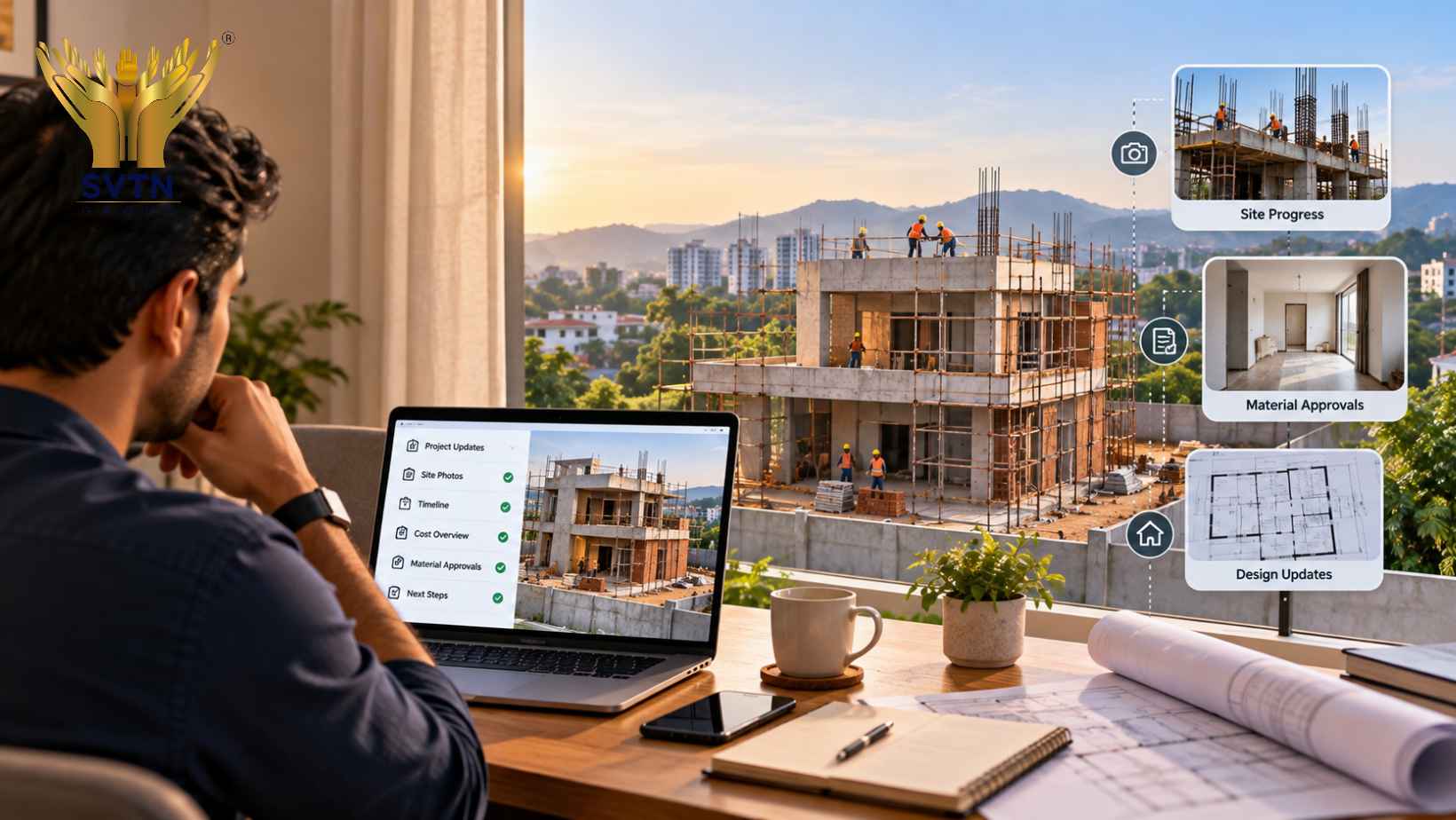
This may include scheduled progress updates, photographs, videos, milestone reports, meetings and a designated contact person.
The reporting frequency should suit the project’s complexity and stage.
More importantly, updates should explain what has been completed, what is planned next and whether any decisions or issues need your attention.
4. Ask for Milestone-Based Progress Reports
Photographs can show that work is happening, but they don’t always explain whether the work matches the approved scope.
A useful progress report should connect site updates to the construction schedule and project milestones.
For example, you should be able to understand whether foundation work is complete, what inspections have taken place and which activity is scheduled next.
Reports should also identify delays, pending decisions and changes that could affect the budget or completion date.
For technical work, photographs are not a substitute for professional inspection. Depending on the stage, you may need checks by the responsible engineer or another qualified professional.
5. Plan Payments Around the Agreed Terms
Remote homeowners need to be especially careful about payment procedures.
Before construction begins, understand the payment schedule and what each payment covers.
Where the agreement links payments to milestones, clarify how completion will be confirmed and what documentation will be provided.
Also establish how additional work will be approved and charged.
Avoid relying on informal messages or verbal promises when a payment relates to a change in scope or a significant additional expense.
A documented process makes financial decisions easier to track and reduces misunderstandings.
6. Decide How Material Selections Will Be Approved
Materials and finishes often require homeowner input.
Tiles, sanitaryware, doors, windows, paint colours and electrical fittings may have several options at different price points.
If these choices are left until the last minute, they can delay procurement or create rushed decisions.
Create a selection schedule that identifies when each decision is required.
Where possible, request product specifications, samples, photographs or supplier details before approving an option.
Make sure the selected item matches the agreed budget and specification. A visual reference alone may not capture differences in size, finish or technical performance.
7. Understand Who Manages Contractors and Suppliers
If you are not physically present in Pune, you probably don’t want to coordinate individual workers and suppliers every day.
Before signing an agreement, understand who manages the site, coordinates different trades and handles day-to-day construction decisions.
A turnkey arrangement may provide a primary point of coordination for the agreed work, but the exact responsibilities should still be documented.
Ask how issues are escalated and who will contact you if a decision is required.
Clear responsibility helps prevent important tasks from falling between different teams.
8. Plan Site Visits Strategically
Remote management doesn’t necessarily mean you should never visit the site.
Instead, plan visits around decisions and milestones where your presence can be useful.
For example, you may want to visit during the initial planning stage, review a major design decision in person or inspect the home before handover.
The need for visits depends on the project, your preferences and the professional support available.
For technical inspections, a qualified professional can provide an assessment that goes beyond what a homeowner can see during a general walkthrough.
9. Keep a Record of Changes and Decisions
Construction involves many decisions, and it can become difficult to remember what was agreed several months earlier.
Keep a written record of approved drawings, material selections, scope changes, additional costs and revised timelines.
When a change is proposed, make sure its impact is understood before approval.
This is particularly important when you’re managing the project from another city, because the site team needs to work from the same instructions.
A clear record also makes it easier to understand why the final cost or schedule differs from the original plan.
10. Prepare for Unexpected Issues
Even a carefully planned project can face unforeseen conditions.
Material availability may change. Weather may affect certain activities. Site conditions may require further investigation. A design decision may need revision.
What matters is how these issues are communicated and resolved.
Ask the construction company to explain the problem, the available options, the likely cost or schedule impact and the decision required from you.
Avoid approving major changes without understanding their implications.
A remote project needs a clear decision-making process—not a promise that nothing will ever change.
11. Plan the Final Inspection Before Handover
Don’t wait until the last day to think about how the completed house will be checked.
Before handover, understand the process for inspecting finishes, checking relevant services, identifying incomplete items and resolving defects.
A snag list can help record items that require attention.
Ask for relevant documentation, warranties and instructions for systems installed in the house, as applicable.
If you cannot travel to Pune, discuss whether a trusted representative or qualified independent professional can inspect the property on your behalf.
Remote handover should still involve a clear review of the completed work.
Why a Turnkey Construction Company in Pune May Suit Remote Homeowners
When multiple contractors are hired separately, the homeowner may need to coordinate schedules, material deliveries, design changes and work sequencing.
That can be difficult when you are not nearby.
A Turnkey Construction Company in Pune may simplify the arrangement by managing multiple stages of the project under a defined contract.
Depending on the scope, this may include material procurement, civil construction, electrical work, plumbing, finishing and coordination between different teams.
However, turnkey construction does not automatically mean every service is included or that the homeowner has no decisions to make.
The important thing is to choose a delivery model with clearly defined responsibilities and a reporting process that suits your situation.
Questions to Ask Before Hiring a Construction Company for Remote Construction
Before appointing a company, ask:
- Who will be my primary point of contact?
- How often will I receive progress updates?
- What will those updates include?
- How will site quality be checked?
- How are payments linked to project progress?
- How are changes and additional work approved?
- Who coordinates materials and contractors?
- How will delays and unexpected issues be communicated?
- What happens if I cannot visit the site?
- How is the final inspection and handover managed?
These questions can help you understand whether the company’s working process fits the realities of remote construction.
How SVTN Group Approaches Residential Construction
At SVTN Group, a well-organised construction project begins with understanding the homeowner’s requirements and defining the scope clearly.
For homeowners living outside Pune, communication and coordination are especially important. You should know what is happening at the site, which decisions are pending and how the agreed work is progressing.
Before starting a project, discuss the reporting arrangements, scope of work, material approvals, payment terms and handover expectations with the construction team.
The goal is to establish a process that helps you remain informed without needing to manage every site activity personally.
Frequently Asked Questions
Can I build a house in Pune while living in another city?
Yes. Remote construction is possible when the project has a clear scope, reliable site supervision, documented decisions, regular reporting and an agreed payment and approval process.
Is a turnkey construction company suitable for NRI homeowners?
It may be suitable for NRI homeowners who want a single primary point of coordination for the work included in their contract. The scope, communication arrangements, payment process and responsibilities should be clearly agreed upon.
How can I monitor construction progress remotely?
You can use scheduled progress reports, site photographs, videos, milestone updates and online meetings. Technical inspections may still require a qualified professional, depending on the construction stage.
How should I make payments when managing construction remotely?
Follow the written payment schedule and verify the relevant milestone or contractual condition before releasing payments. Keep records of invoices, receipts, approved changes and agreed additional costs.
Do I need to visit the construction site personally?
Not necessarily for every activity. However, planned visits can be useful at important milestones. Where appropriate, a trusted representative or qualified independent professional may help review the site when you cannot attend.
What happens if I want to change the design during construction?
The proposed change should be assessed for its impact on completed work, materials, cost and schedule. Approve it only after the implications are understood and documented.
Does turnkey construction include all materials and finishing work?
Not automatically. The included materials, finishes, services and exclusions depend on the contract. Review the detailed scope before signing.
How can I reduce the risk of disputes during remote construction?
Use a clear written agreement, establish communication procedures, document decisions, understand the payment schedule and require changes to be recorded before implementation.
Conclusion
Building a home in Pune while living elsewhere is possible, but it requires a different approach to planning and communication.
You may not be able to visit the site every week, but you should still be able to understand progress, review important decisions and know who is responsible for the work.
A clearly defined construction scope, regular reporting, documented approvals and a structured handover process can make remote construction easier to manage.
If you’re considering a turnkey arrangement, evaluate not just the construction package but also the way the company communicates and coordinates the project.
Distance doesn’t have to prevent you from building your home. The key is to make the process clear, organised and accountable from the beginning.