Pune has quickly become one of India’s fastest-growing commercial hubs, attracting IT parks, corporate offices, retail spaces, co-working facilities, and large mixed-use developments. As these projects become more complex, businesses are looking for tools that reduce risk, streamline collaboration, and ensure predictable outcomes. This is where BIM (Building Information Modelling) has emerged as a game-changer.
Today, BIM is no longer just a digital design tool. It is a complete project management ecosystem that supports planning, engineering, construction, and facility operations. Many leading developers in Pune have already integrated BIM to improve decision-making, reduce coordination errors, and speed up project delivery.
What Is BIM (Building Information Modelling)?
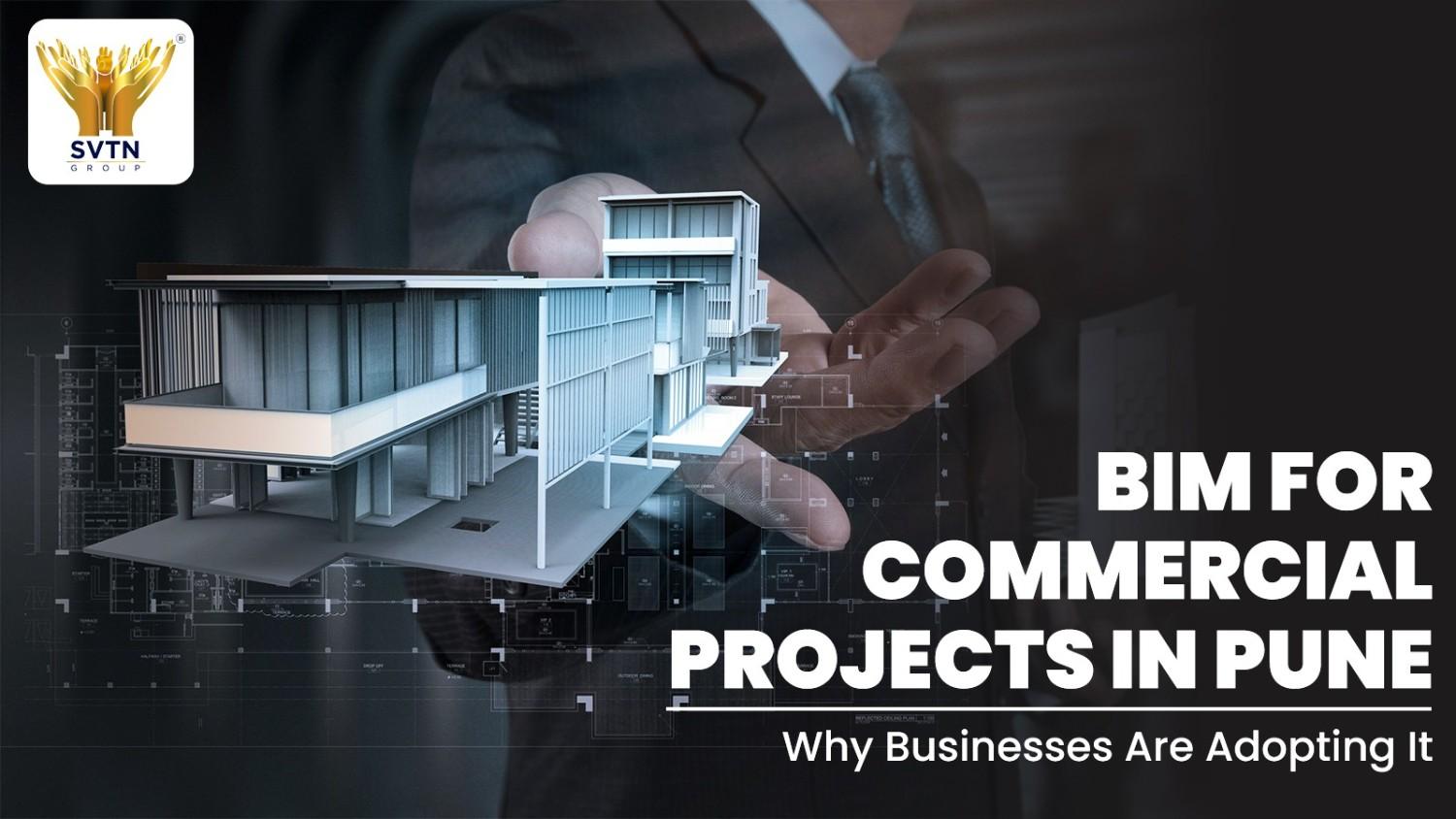
Building Information Modelling is a digital representation of the physical and functional aspects of a building. It goes beyond drawings and 3D models — BIM acts as a shared information platform where architects, structural engineers, MEP teams, contractors, and facility managers can collaborate in real time.
A BIM model typically includes:
- 3D architectural layouts
- Structural systems
- HVAC, electrical, and plumbing layouts
- Material specifications
- Quantity take-offs
- Costing and phasing details
- Clash detection and resolution
- Simulation for schedule, safety, and performance
Because all stakeholders work on a single unified model, BIM significantly reduces errors, rework, and communication gaps.
The Rising Need for BIM in Pune’s Commercial Construction
Commercial projects in Pune have become larger, smarter, and more engineering-intensive over the years. With this complexity comes the need for coordination and clarity.
BIM is becoming essential in Pune because:
- Commercial buildings involve high-density MEP systems
- Developers want faster approvals and fewer design conflicts
- Smart, sustainable building features require integrated planning
- Rentable spaces must be optimised for efficiency
- Tight project timelines leave no room for rework
- Corporate clients expect transparency and precision
As a result, BIM has moved from being optional to increasingly standard for commercial development.
Key Benefits of Using BIM in Commercial Projects
1. Reduced Design Clashes and Rework
BIM identifies clashes between structural, electrical, plumbing, HVAC, and fire systems early in the design stage, avoiding costly on-site conflicts.
2. Faster and More Accurate Decision-Making
Stakeholders can visualise the project through 3D models, making design reviews easier and reducing confusion.
3. Better Cost Control
With BIM-based quantity take-offs and early clash detection, developers avoid unnecessary material wastage and mid-project cost escalations.
4. Improved Construction Scheduling
BIM supports 4D simulation, linking model elements with timeline data. This helps optimise sequencing, reduce idle time, and achieve timely delivery.
5. High-Quality Construction Output
Coordinated designs reduce errors during execution, leading to better finishing, accuracy, and compliance.
6. Enhanced Collaboration Across Teams
All consultants and contractors work on a centralised model, improving communication and reducing delays.
7. Efficient Facility Management
Post-handover, BIM acts as a digital manual for maintenance teams, supporting repairs, asset tracking, and long-term operations.
How BIM Transforms the Construction Workflow
BIM reshapes the entire construction lifecycle in the following ways:
Design Stage
- Architects and engineers coordinate layouts
- Clashes are identified and resolved
- 3D simulations improve design efficiency
Planning Stage
- Accurate quantity estimation
- Budgeting based on real model data
- Detailed sequencing for procurement and logistics
Execution Stage
- Contractors work with precise drawings
- Rework reduces significantly
- Quality inspections become more systematic
Post-Construction Stage
- Facility management teams access digital asset data
- Future renovations become easier
- Long-term maintenance costs reduce
This integrated workflow drives predictability, which is critical for commercial clients.
Real-World Example – How Pune’s Commercial Projects Benefit from BIM
Consider a typical commercial building in areas like Baner or Viman Nagar. These projects involve:
- Complex HVAC and electrical systems
- High loading for IT floors
- Fire-compliant layouts
- Extensive ducting and cable routing
- Tight floor-to-floor heights
Without BIM, clashes between ducts, beams, electrical conduits, and fire lines often appear during construction. These mistakes cause delays, rework, and additional expense.
With BIM:
- All systems are coordinated virtually
- Execution drawings match real conditions
- Quantities are accurately estimated
- Contractors work with clear layouts
- The project finishes on time with fewer disruptions
This real-world advantage is why Pune’s developers are adopting BIM rapidly.
Why Businesses in Pune Are Adopting BIM
Businesses today demand:
- Faster possession
- No overruns
- High-quality finish
- Transparent reporting
- Better space utilisation
- Long-term operational efficiency
BIM supports all these priorities. For organisations investing in office spaces, retail setups, or commercial complexes, BIM ensures predictable results and minimises risk.
SVTN Group – Leading BIM Implementation Partner in Pune
SVTN Group integrates BIM strategically into commercial projects to improve efficiency and project outcomes. The team’s BIM capabilities include:
- BIM modelling from concept to execution
- MEP coordination using clash detection tools
- Quantity extraction for accurate costing
- 4D planning for schedule optimisation
- Technical audits for constructability
- Coordination with consultants and contractors
- Integration of BIM into project management systems
SVTN combines engineering expertise, strong on-site execution, and modern digital tools to ensure BIM adds actionable value rather than being just a presentation model.
Future of BIM in Pune’s Construction Industry
The future points strongly towards digital construction. Pune’s commercial markets will see:
- Mandatory BIM requirements for large projects
- Wider adoption in industrial and warehousing spaces
- Integration of IoT and smart-building data with BIM models
- Virtual design reviews becoming standard practice
- AI-assisted planning and error detection
- Digital twins for long-term operations and maintenance
As the city’s commercial footprint expands, BIM will become the foundation for efficient, transparent, and high-quality project delivery.
Conclusion
BIM is transforming how Pune plans and executes commercial construction. It offers clear coordination, cost control, improved scheduling, and long-term facility benefits. For developers and business owners, adopting BIM means fewer risks and smoother project delivery.
SVTN Group continues to lead BIM-enabled construction management and execution, helping commercial clients achieve higher quality, predictability, and long-term performance.
FAQ
1. What is the cost of implementing BIM for a project in Pune?
Costs vary depending on project size, complexity, number of services involved, and the level of BIM detail required. However, most developers recover BIM costs through reduced rework, fewer clashes, and overall project savings.
2. Is BIM suitable only for large commercial projects?
No. While large commercial and IT projects benefit the most, BIM is also increasingly used for mid-sized offices, retail spaces, hospitality projects, and industrial buildings.
3. Does SVTN Group offer BIM integration during the design phase?
Yes. SVTN integrates BIM from the early design stage, ensuring coordination between architectural, structural, and MEP consultants to minimise conflicts and improve constructability.